
サイト内検索
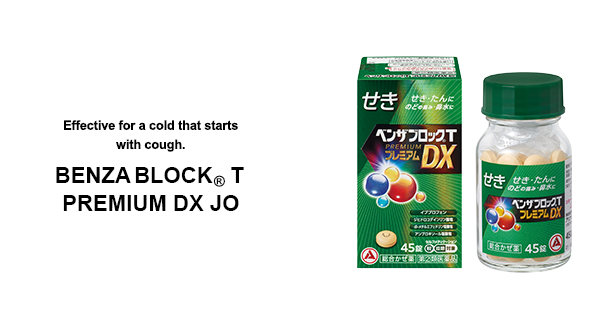

BENZA BLOCK T PREMIUM DX JO
ベンザブロックTプレミアムDX錠
CHARACTERISTICS
- Contains ibuprofen 600 mg (daily dose) to relieve sore throat and reduce fever.
- Dihydrocodeine phosphate acts on the cough center to relieve cough.
- dl-Methylephedrine hydrochloride dilates the bronchi, making breathing easier, relieving cough, and facilitating the expectoration of phlegm.
- Ambroxol hydrochloride enhances the activity of the airway mucosa to expel foreign matter, making phlegm easier to expectorate.
- Contains 8 ingredients to relieve various cold symptoms.
- Easy-to-take, small, light-yellow round tablet.
USES
Relief of various cold symptoms: cough, phlegm, sore throat, runny nose, stuffy nose, sneezing, feeling cold (chills due to fever), fever, headache, joint pain, and muscle pain.
DOSAGE AND DIRECTIONS
| Age | One dose | Daily dose |
| 15 years or over | 3 tablets | 3 times |
| Under 15 years | Do not take | |
Precautions regarding dosage and directions
Please follow the recommended dosage and directions.
INGREDIENTS
In 9 tablets (daily dose)
| ACTIONS | INGREDIENTS | CONTENTS |
|---|---|---|
| Reduces fever and relieves pain | Ibuprofen | 600mg |
| Relieves cough | Dihydrocodeine phosphate | 24mg |
| Relieves cough and phlegm | dl-Methylephedrine hydrochloride | 60mg |
| Reduces phlegm | Ambroxol hydrochloride | 45mg |
| Relieves runny nose and sneezing | d-Chlorpheniramine maleate | 3.5mg |
| Relieves headaches | Anhydrous caffeine | 75mg |
| Vitamin | Riboflavin (vitamin B2) | 12mg |
| Vitamin | Thiamine nitrate | 25mg |
Inactive ingredients:
Lactose hydrate, cellulose, anhydrous silicic acid, croscarmellose sodium, hydroxypropyl cellulose, magnesium stearate, maltitol syrup, erythritol, partially hydrolyzed polyvinyl alcohol, talc, titanium oxide, red ferric oxide
Precautions regarding ingredients:
Although urine may turn yellow after taking this medicine, do not worry because this is caused by riboflavin in this medicine.
PRECAUTIONS FOR USE
What you should NOT do
(If you do not follow the precautions, it may worsen your symptoms, or you may be at an increased risk of side effects and accidents.)
- The following persons should not take this medicine:
- Persons who have experienced allergic reactions to this medicine or any of its ingredients.
- Persons who have experienced asthma after taking this medicine or other cold medications or antipyretic analgesics.
- Children under 15 years of age.
- Pregnant women within 12 weeks of the expected delivery date.
- Persons who are receiving medical treatment for the following diseases or medical supplies at medical institutions: Gastroduodenal ulcer, blood diseases, liver diseases, kidney diseases, heart diseases, hypertension, or persons who are receiving Zidovudine (Retrovir, etc.)
- Do not use any of the following medications while you take this medicine:
Other cold medicines, antipyretic analgesics, sedating drugs, cough and expectorant drugs, oral remedies containing an antihistamine agent (such as oral remedies for rhinitis, motion sickness drugs, medicines for allergies, and sedative hypnotics), etc. - After taking this medicine, do not operate vehicles or machinery. (Drowsiness or other symptoms may occur.)
- Breastfeeding women should not take this medicine or should avoid breastfeeding if taking this medicine.
- Do not drink alcohol before or after taking this medicine.
- Do not take this medicine continuously for more than 5 days.
Who should seek consultation
- The following persons should consult a physician, pharmacist, or registered salesperson before taking this medicine:
- Persons currently receiving treatment from a physician or dentist.
- Women who are or may be pregnant.
- Breastfeeding women.
- Persons who have experienced allergic reactions to medicines or other substances.
- Persons with the following symptoms: high fever, difficulty in urination.
- Persons diagnosed with the following conditions: Thyroid dysfunction, diabetes, glaucoma, systemic lupus erythematosus, mixed connective tissue disease, respiratory dysfunction, obstructive sleep apnea syndrome, obesity, bronchial asthma.
- Persons who have had the following diseases: Gastroduodenal ulcer, ulcerative colitis, Crohn's disease, blood diseases, liver diseases, or kidney diseases.
- Stop taking this medicine immediately and consult a physician, pharmacist, or registered salesperson if the following symptoms appear after taking this medicine because they might be side effects of the medicine. Take this leaflet with you.
Affected area Symptoms Skin Rash, redness, itching, and bruising Digestive organs Nausea and vomiting, loss of appetite, stomach discomfort, stomach pain, stomatitis, heartburn, heaviness in the stomach, gastrointestinal bleeding, abdominal pain, diarrhea, blood in stool, feeling of fullness in the stomach/abdomen Neuropsychiatric system Dizziness, insomnia, numbness, and depressed mood Circulatory system Palpitation Respiratory system Shortness of breath Urinary system Dysuria Others Blurred vision, ringing in the ears, swelling, nosebleeds, bleeding gums, difficulty stopping bleeding, bleeding, back pain, and general malaise In rare cases, serious symptoms might occur. In such a case, immediately consult a physician.
Name of symptoms Symptoms Shock
(Anaphylaxis)Symptoms such as itching of the skin, hives, hoarseness, sneezing, itching of the throat, shortness of breath, palpitations, and clouding of consciousness occurring immediately after taking this medicine. Mucocutaneous ocular syndrome (Stevens-Johnson syndrome), toxic epidermal necrolysis, acute generalized exanthematous pustulosis Persistent or rapidly worsening symptoms such as high fever, bloodshot eyes, eye discharge, cracked lips, sore throat, widespread skin rash and redness, small blisters (pustules) on reddened skin, general malaise, and loss of appetite. Hepatic Dysfunction Symptoms such as fever, itching, rash, jaundice (yellowing of the skin or whites of the eyes), brown urine, general malaise, and loss of appetite. Renal Disorders Symptoms such as fever, rash, decreased urine output, generalized swelling, general malaise, joint pain, and diarrhea. Aseptic meningitis Symptoms such as severe headache with stiffness of the neck, fever, and nausea and vomiting. (These symptoms have been particularly reported in persons being treated for systemic lupus erythematosus or mixed connective tissue disease.) Myocardial infarction Symptoms such as crushing chest pain, shortness of breath, and cold sweats. Cerebrovascular disorders Symptoms such as decreased or loss of consciousness, difficulty moving one side of the body, headache, vomiting, dizziness, difficulty speaking, and difficulty finding words may suddenly occur. Interstitial pneumonia Shortness of breath or difficulty breathing may occur when climbing stairs or with slight exertion. Dry cough and fever may also appear, and these symptoms may occur suddenly or persist. Asthma Symptoms such as wheezing (whistling sounds when breathing) and difficulty breathing. Aplastic anemia Symptoms such as bruising, nosebleeds, bleeding gums, fever, pale appearance of the skin or mucous membranes, fatigue, palpitations, shortness of breath, feeling unwell or dizzy, and hematuria. Agranulocytosis Symptoms such as sudden high fever, chills, and sore throat. Respiratory depression Shortness of breath, breathing difficulties, etc. Blood disorders Symptoms such as easy bruising, sudden high fever, chills, sore throat, easy bleeding (bleeding gums, nosebleeds), and difficulty stopping bleeding. Gastrointestinal disorders Symptoms such as stool turning black, hematemesis, bloody stools, and mucous and bloody stools (soft stools mixed with blood, mucus, and pus). - Stop taking this medicine immediately and consult a physician, pharmacist, or registered salesperson if symptoms such as an excessive body temperature decrease, collapse (weakness), and cold extremities (cold hands and feet) appear after taking this medicine. Take this leaflet with you.
- Stop taking this medicine and consult a physician, pharmacist. or registered sales person if the following symptoms appear after taking this medicine and continue or worsen. Take this leaflet with you.
Constipation, dry mouth, drowsiness. - Stop taking this medicine and consult a physician, pharmacist, or registered salesperson if symptoms do not improve after taking this medicine 5 to 6 times (especially if a fever persists three days or longer or repeats). Take this leaflet with you.
PRECAUTIONS FOR STORAGE AND HANDLING
- Store the medicine in its box in a dry, cool place away from direct sunlight.
- Keep out of the reach of children.
- To prevent improper use or loss of quality, do not transfer the medicine to another container.
- Once the bottle is opened, throw away the filler in the bottle. (Putting the filler back into the bottle may change the quality by absorbing moisture. The filler in the bottle protects the tablets from breakage during transportation.)
- Be sure to close the cap tightly after each use. (Failure to tightly close the bottle may result in loss of the quality of the medicine due to moisture.)
- Do not take this medicine after the expiration date.
- Fill in the date when the bottle was opened in the column provided on the box and bottle.
- Once the bottle is opened, take this medicine within about 6 months to maintain quality.